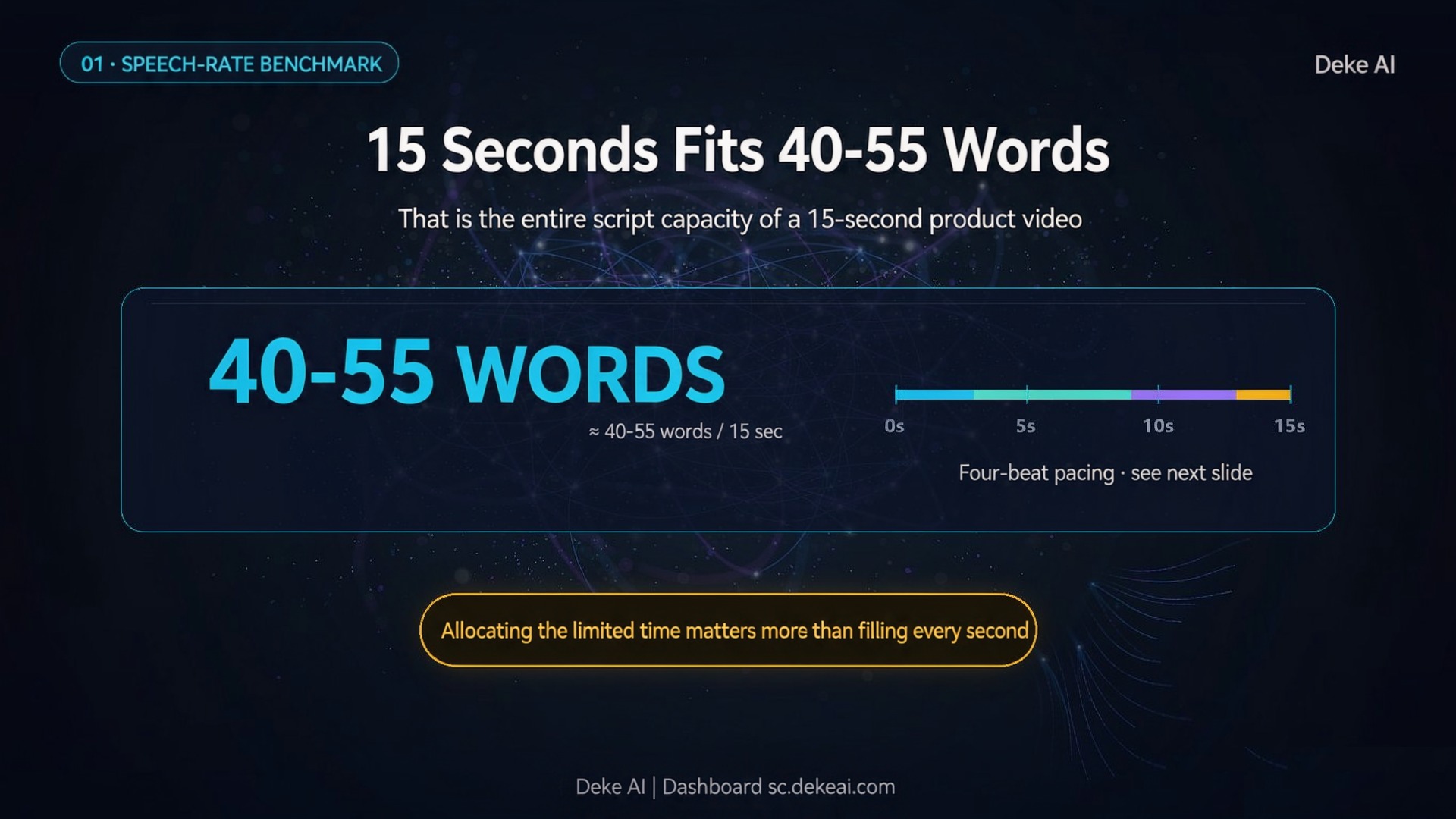
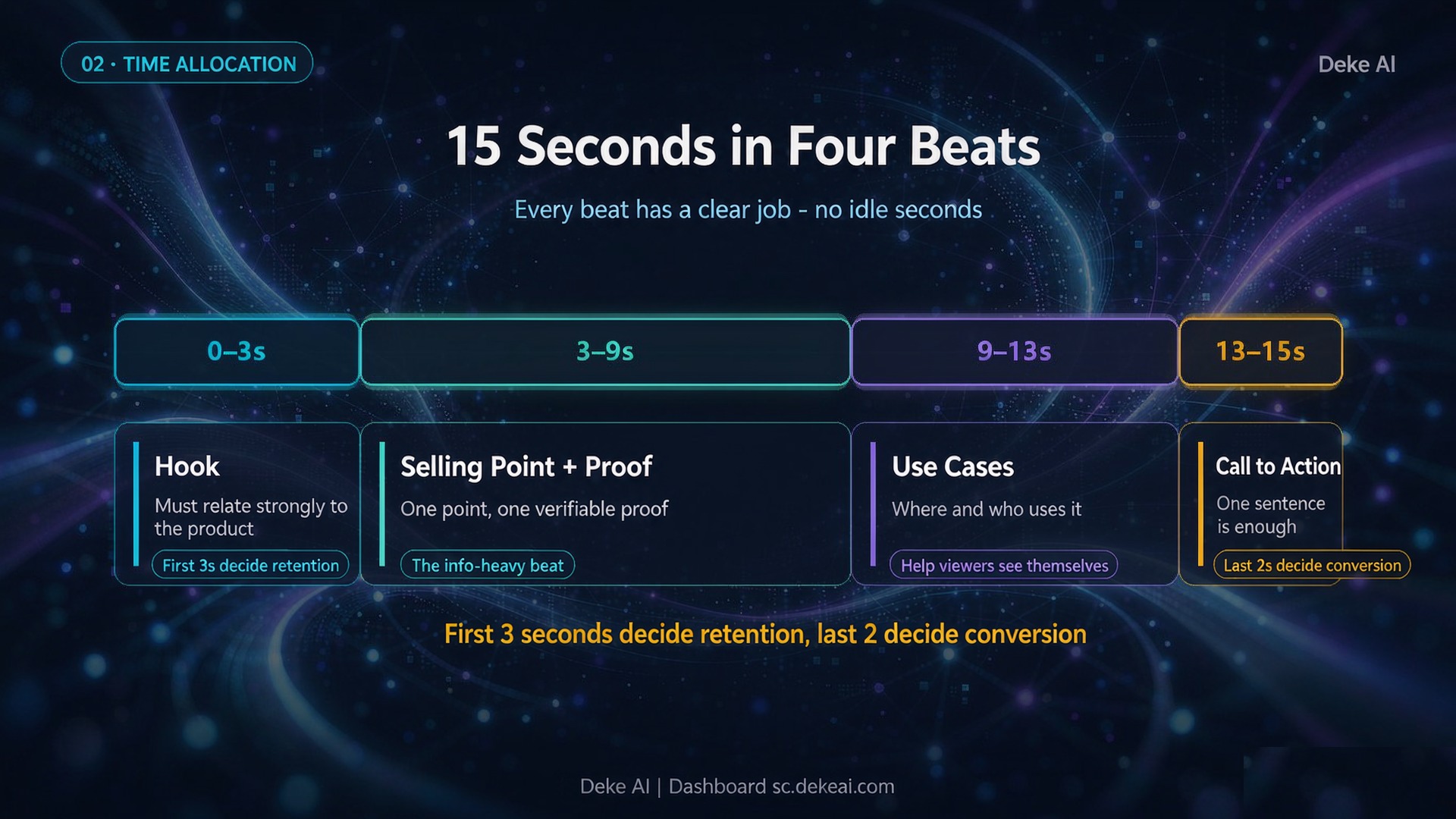
Time allocation suggestions
- 0–3 seconds: Hook (must be strongly related to the product)
- 3–9 seconds: Selling point + evidence
- 9–13 seconds: Usage scenario
- 13–15 seconds: Call to action
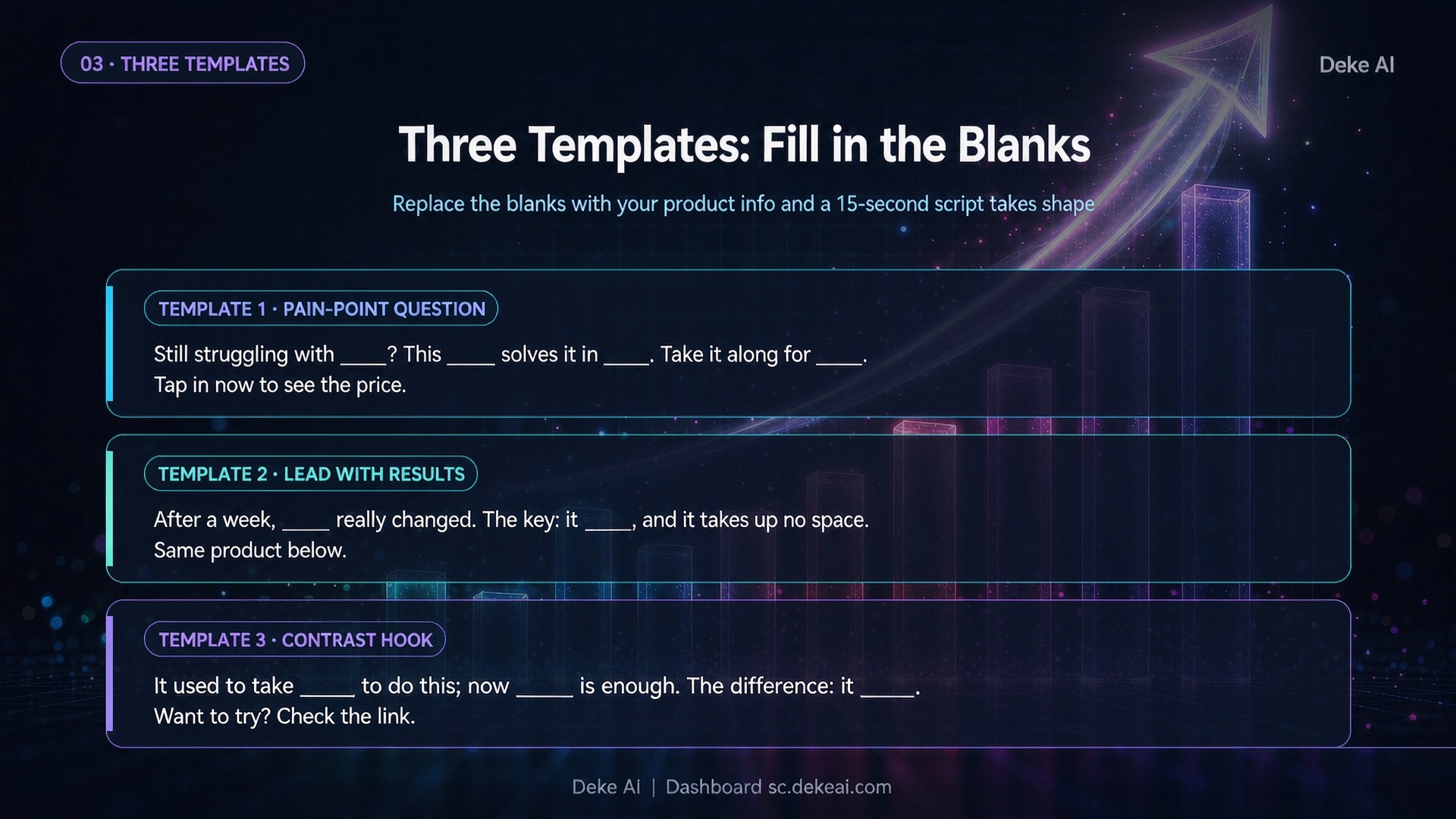
Template 1: Pain Point Questioning
"Still struggling with ____? This ____, ____ can solve it. For daily ____ just bring it along, tap in now to check the price."
Template 2: Result-First
"After one week of use, ____ has really changed. The key is it ____, and ____ doesn't take up space either. The same one is below."
Template 3: Contrast Comparison
"Previously you needed ____ to achieve it, now ____ is enough. The difference lies in its ____. If you want to try it, go straight to the link."
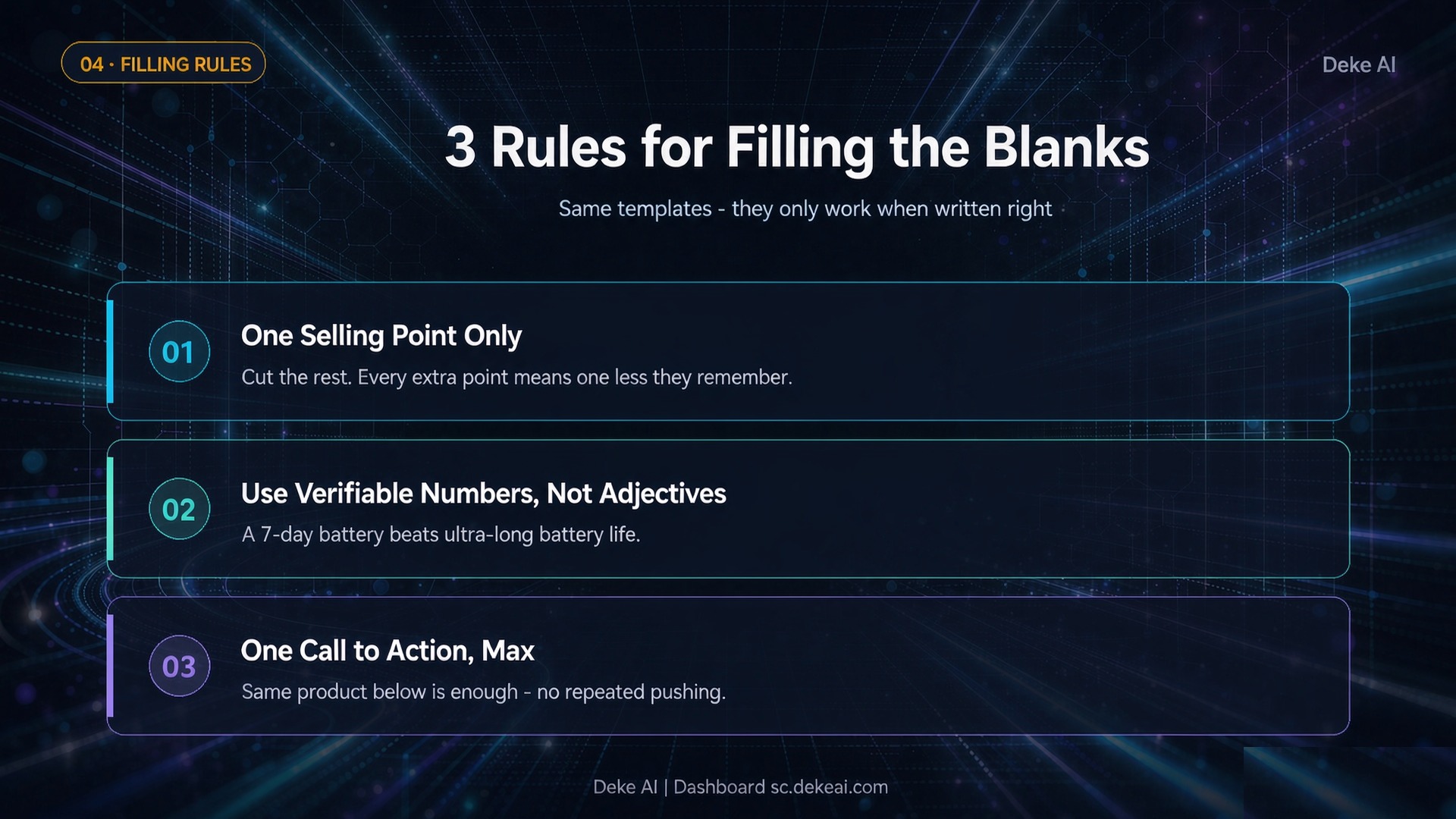
Three principles when filling in the blanks
- Talk about only one selling point; delete everything else
- Replace adjectives with verifiable, specific numbers
- The call to action should not exceed one sentenc
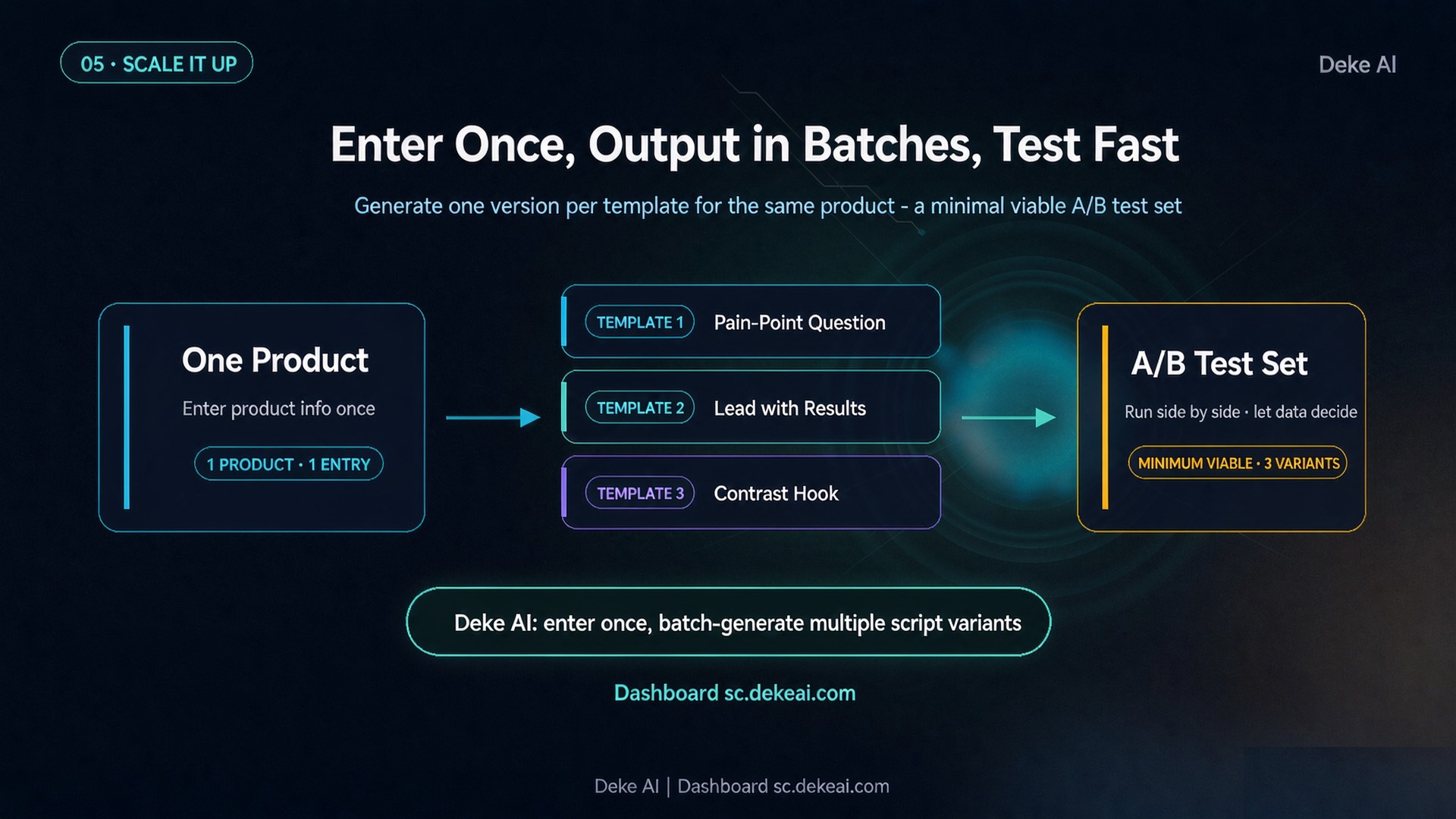
Put it to batch use
Generate one version of each of the three templates for the same product, and you have a minimal usable set of A/B testing materials. DKS supports entering information once and batch-producing multiple script variants, making it suitable for this kind of rapid testing.