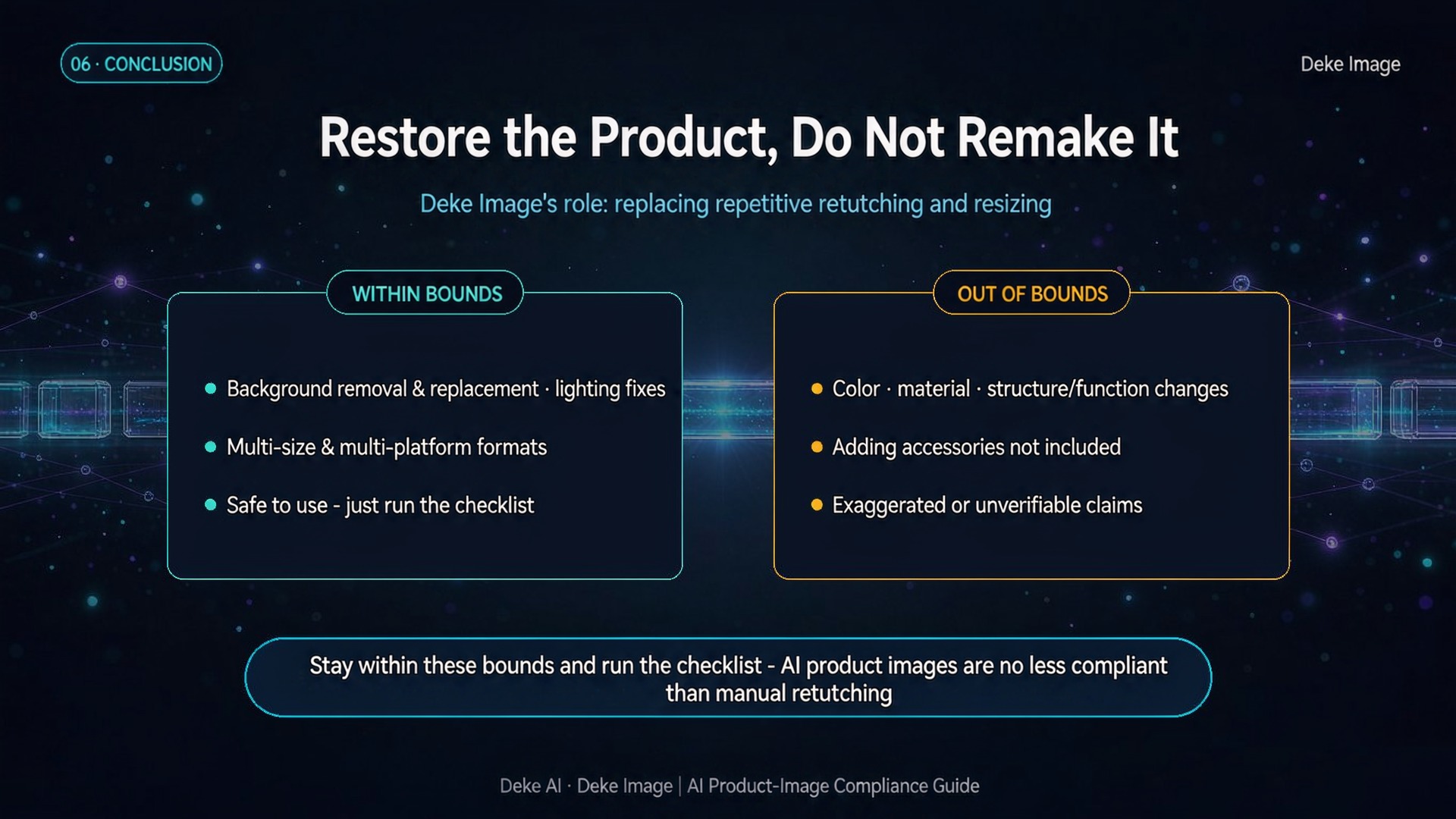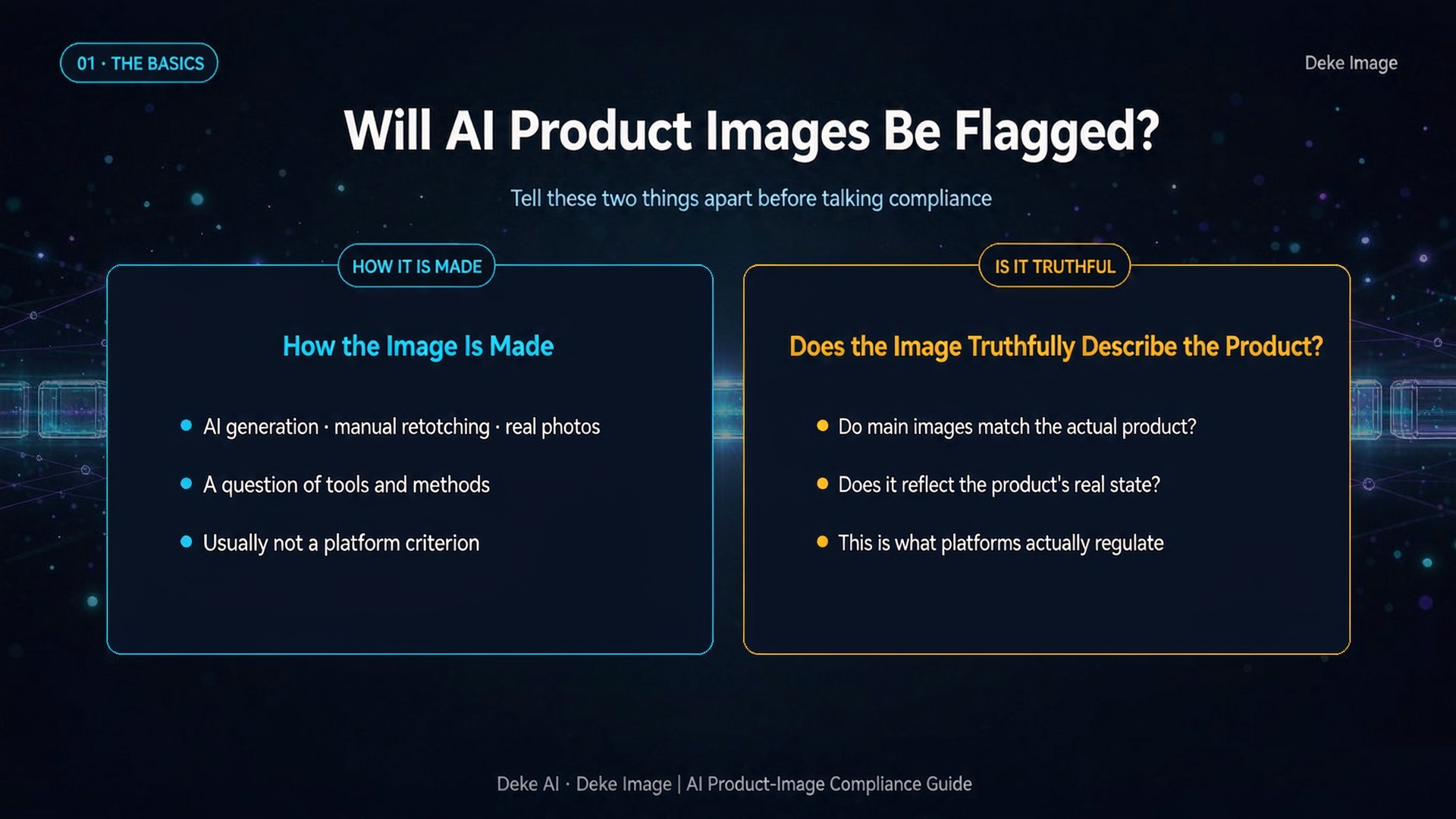
What platforms focus on
The control focus of mainstream e-commerce platforms lies in the truthfulness and completeness of product descriptions: whether the main image is consistent with the actual item, and whether the actual state of the product is restored in necessary positions. The generation method itself is usually not the basis for judgment, but if the generated result clearly differs from the actual item, it falls within the scope of false description.
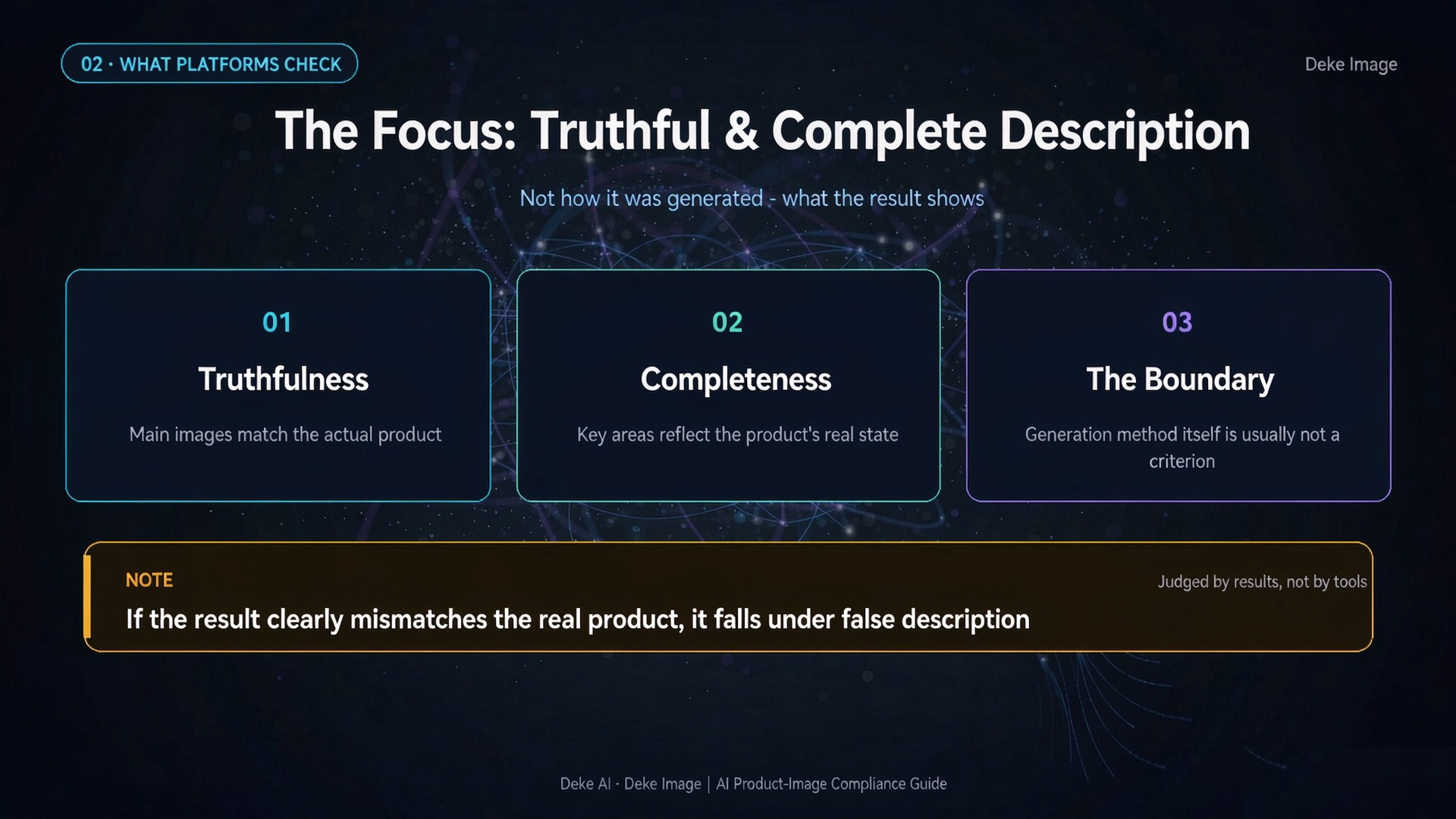
Scenarios where you can use it with confidence
Background removal, background replacement (layout and scene adjustments that do not change the product itself)
Lighting enhancement, sharpening, flaw repair (restoration rather than misleading beautification)
Multi-size and multi-platform format adaptation
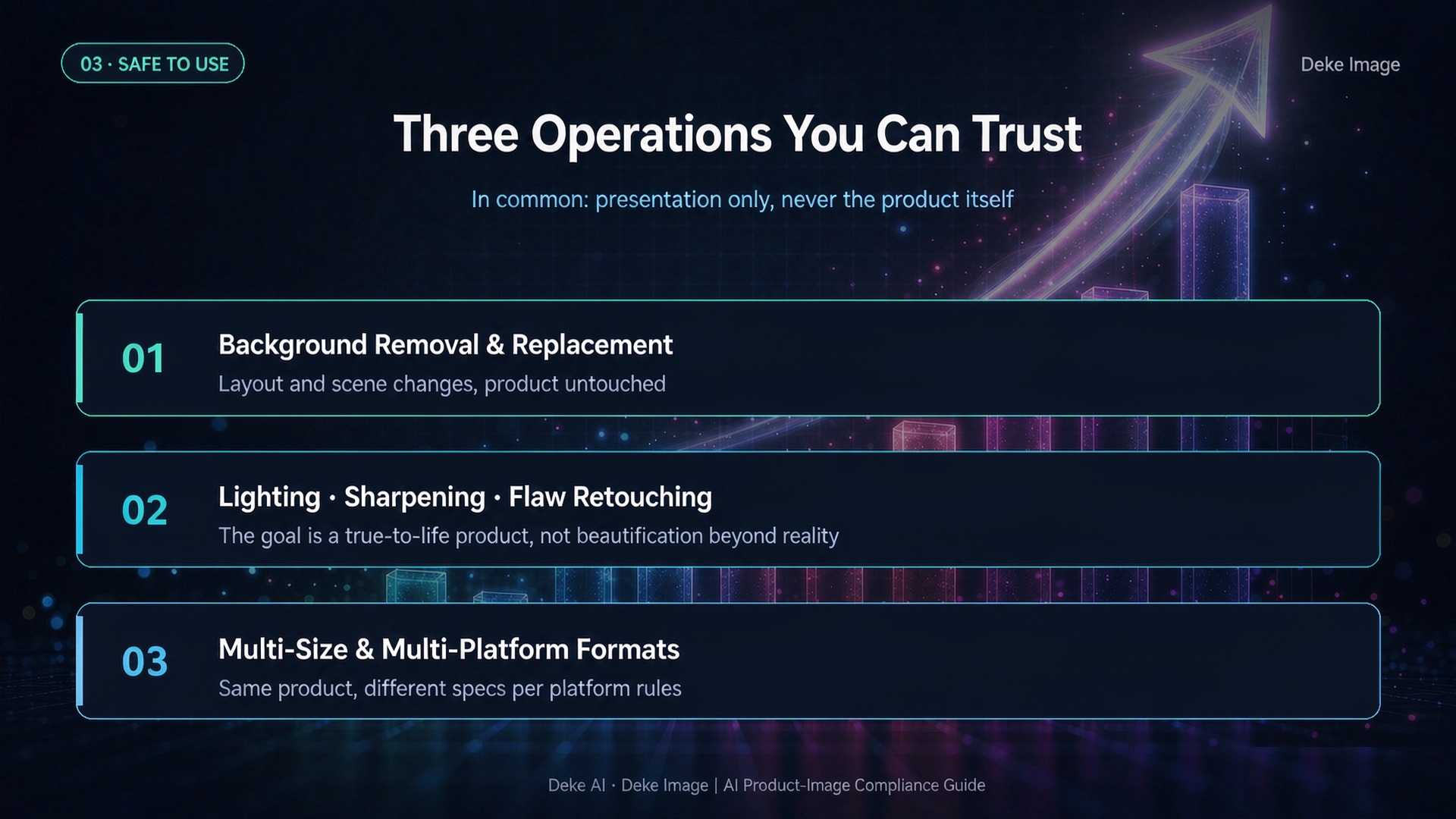
Scenarios requiring caution
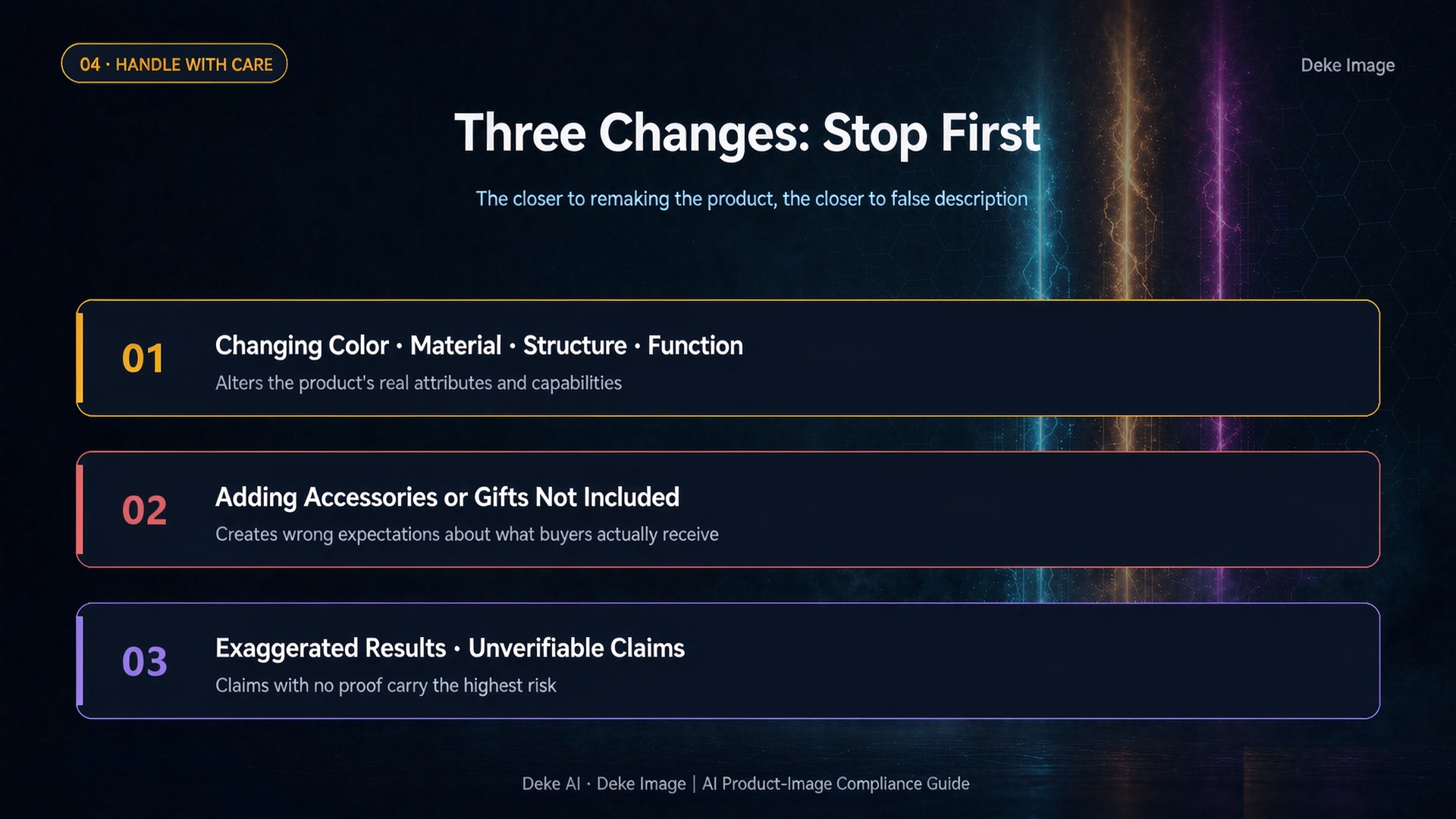
Modifying the color, material, structure, or functional performance of the product
Adding accessories or gifts not included with the actual item
Exaggerating usage effects or adding unverifiable promises to the main image
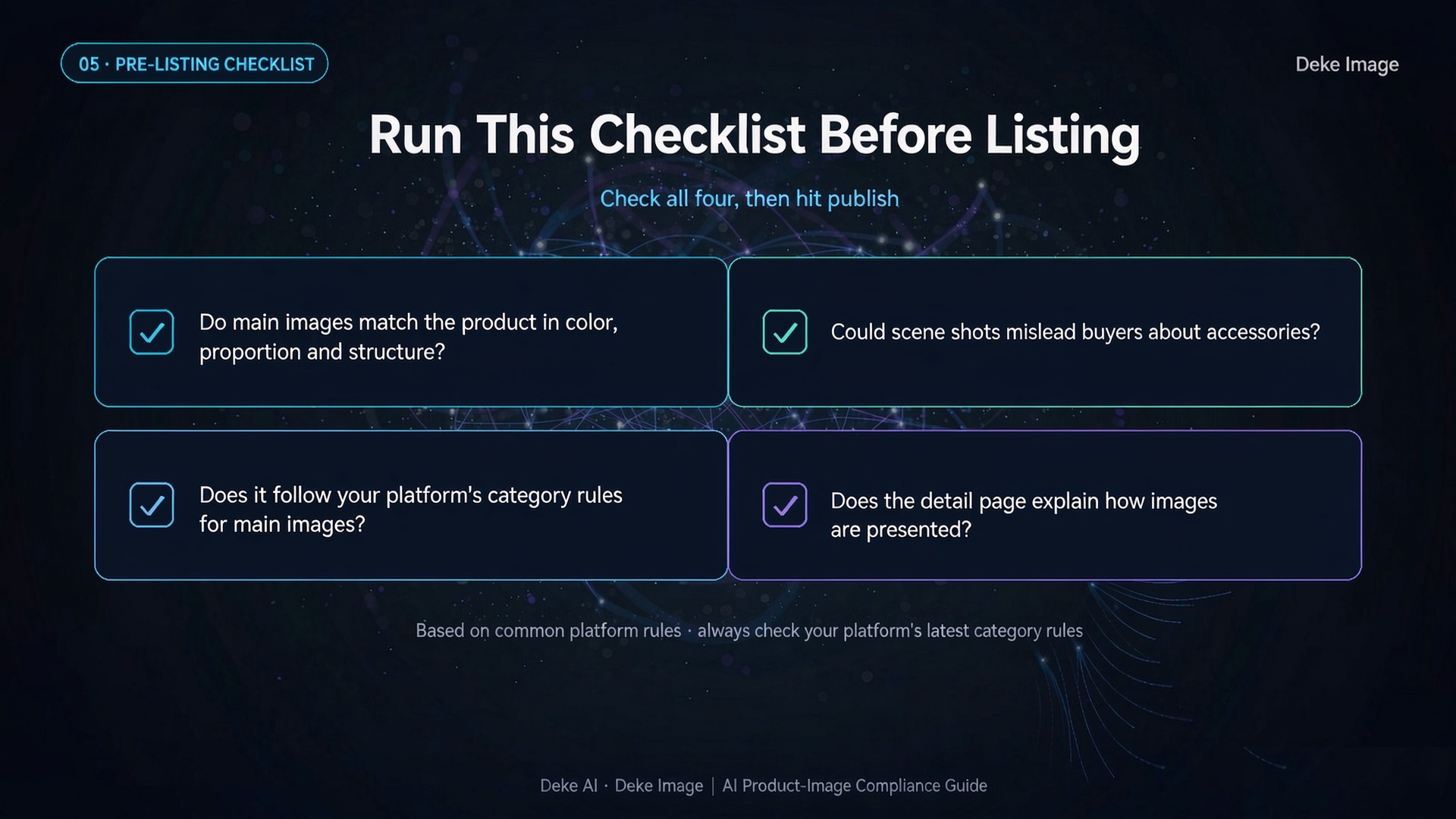
Pre-listing self-check list
Are the main image and the actual item consistent in color, proportions, and structure
Could the scene image cause consumers to misunderstand the accessories
Have you followed the specific main image regulations of your platform for that category
Does the detail page provide necessary explanations about how the images are presented
Conclusion
DKS Image is positioned to replace the repetitive labor of photo retouching and resizing, with the processing goal always being "restoring the product" rather than "remaking the product." As long as this boundary is maintained and the checklist is run through, AI product images and manual retouching have no essential difference in compliance.